Samurai to the Imperial Court: Japanese Metalwork
On view March 29-September 6, 2026 at the Dallas Museum of Art
Exhibition of Japanese Art Illuminates 500 Years of Metal Mastery Featuring important works from the DMA’s collection, “Samurai to the Imperial Court” surveys the artistry, innovation and beauty of Japan’s metalworking tradition.
Dallas, TX—February 18, 2026—This spring, the Dallas Museum of Art (DMA) premieres Samurai to the Imperial Court: Japanese Metalwork, an exhibition tracing five centuries of metal art in Japan. Through more than 90 works of art drawn from the DMA’s significant holdings and other leading collections, including The Ann & Gabriel Barbier-Mueller Museum: The Samurai Collection, Dallas, Samurai to the Imperial Court celebrates the technical mastery, innovative spirit and aesthetic brilliance of Japanese metal artists. From samurai arms and armor to imperial court commissions, from luminous enameled vessels to sculptures of fantastical animals and figures, this exhibition highlights a dazzling array of objects shaped by centuries of imagination and craftsmanship. The exhibition opens on March 29 and will remain on view through September 6, 2026.
Metalworking has been an integral part of Japanese culture for over 2,000 years, dating back to the 3rd century BCE, when techniques originating in China were transmitted to Korea and Japan. By the Edo period (1615-1868), during the age of the samurai, metalworking became a revered art form through increasingly refined craftsmanship in sword- and armor-making. Presented in five thematic sections, Samurai to the Imperial Court highlights Japanese metal artists and their virtuosity in metalworking from the late Muromachi period (1336-1573) through the Meiji period (1868-1912), featuring works representing an array of metals and techniques, from iron, bronze, silver, gold and mixed metals, to casting and cloisonné enameling.
“While metal craftsmanship has a very long tradition and has played a significant role throughout Japan’s history, less is known about the artists behind these works and their many technical innovations,” said Dr. Jacqueline Chao, The Cecil and Ida Green Curator of Asian Art. “The magnificent works of art in Samurai to the Imperial Court offer a deeper view into the profound ingenuity, aesthetic diversity and cultural significance of these artists and their art forms.”
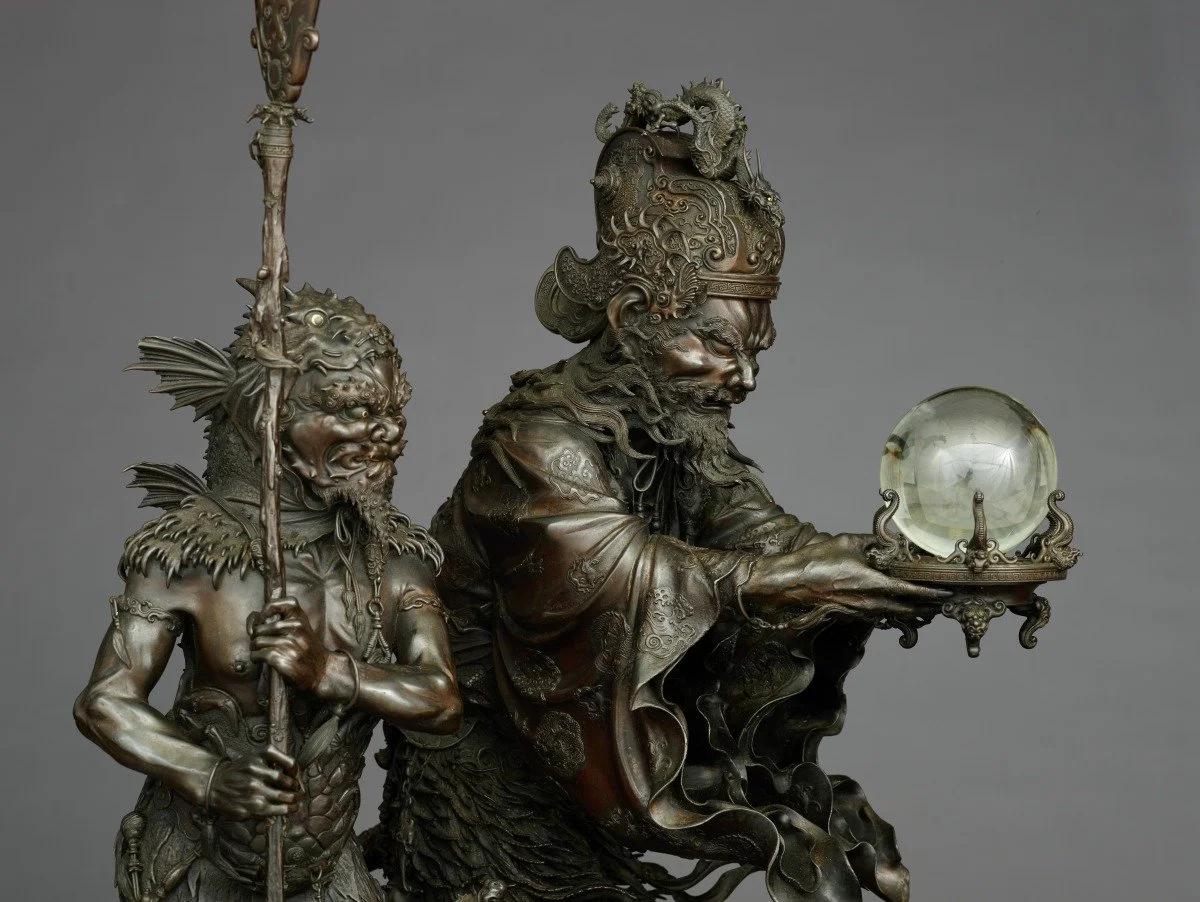
Samurai to the Imperial Court begins with an introductory overview of different metals and Japanese metalworking casting and decorative techniques. The exhibition then continues with a section that explores innovations in metalworking in samurai culture, featuring important examples of samurai armsand armor from the 16th to the 19th centuries, and exquisite decorative metal objects that were made by metalsmiths from the 1700s onward during a time of peace, including a rare sake fountain by Okamura Sugaji that features an idealized image of Mount Horai, the legendary isle of the immortals, and a jjizai okimono, or fully articulated model of a spiny lobster, created with the same hammering and riveting techniques used to produce samurai helmets and body armor. The next section presents exquisite decorative metal objects made by metalsmiths during the Meiji period (1868-1912). After the Meiji Restoration of 1868, the samurai class was dissolved, and the right to wear swords in public was abolished in 1876. As a result, many highly skilled metal artists lost their patrons and had to find new ways of supporting themselves, turning their attention to creating other forms of metal art of the highest quality. This, coupled with the Meiji government’s encouragement of innovation in metalworking, led to a wide range of new forms and decorative techniques that were featured in exhibitions across Japan and in World’s Fairs during this period. This section features several important pieces, including an incense burner shaped like a falcon perched on an anchor by Sano Takachika that once belonged to Emperor Meiji himself, and several works made by metal artists who were appointed as Teishitsu Gigeiin (Artist Craftsmen to the Imperial Household), the highest official title given in the Meiji period to artists in recognition of their exceptional mastery in traditional Japanese arts and crafts. The exhibition also features impressive examples of brilliantly colored Japanese cloisonné enameling, showcasing works from each of the five artist companies that executed imperial commissions of cloisonné enameling during the Meiji period. Samurai to the Imperial Court culminates with a magnificent Dragon King of the Sea bronze-cast sculpture, recognized as the most significant Meiji period bronze sculpture in North America, and one of many examples of the DMA’s important collection of Japanese metalworks featured in this exhibition.
“Samurai to the Imperial Court is a content-rich showcase of outstanding Japanese metalwork, many examples of which we are fortunate to have right here in our own collection” said Brian Ferriso, The Eugene McDermott Director of the Dallas Museum of Art. “The exhibition is a trove of knowledge for our audiences and not only provides the opportunity to experience the beauty of these artworks and their incredible craftsmanship, but demonstrates our commitment to preserving, researching and presenting the arts and cultures of Asia in ways that deepen public understanding and appreciation.”
DMA Members get free and early access to exhibition tickets on Monday, March 2. Tickets are $20 and go on sale to the public on Tuesday, March 3. Members see the exhibition early, during Member Preview Days, Thursday, March 26, through Saturday, March 28. Guests can learn more at dma.org.Support
Samurai to the Imperial Court: Japanese Metalwork is organized by the Dallas Museum of Art. The Dallas Museum of Art is supported, in part, by generous DMA Members and donors, the Texas Commission on the Arts and the citizens of Dallas through the City of Dallas Office of Arts and Culture.
About the Dallas Museum of Art
The Dallas Museum of Art (DMA) is an inclusive, welcoming space for everyone to see its global collection of more than 25,000 works spanning 5,000 years of history and a range of world cultures. The DMA is one of the largest art museums in the United States and is located in one of the fastest growing metropolitan areas in the country, with free general admission for all visitors. As an Open Access institution, the DMA offers digital images of all public-domain artworks in its collection for use by the public. The DMA provides educational programming for all ages, from exhibitions and lectures to concerts, literary events and dramatic performances. The Museum is open Wednesday through Sunday, 11 a.m.-5 p.m., and is always open at dma.org. The Dallas Museum of Art is supported, in part, by generous DMA Members and donors, the Texas Commission on the Arts and the citizens of Dallas through the City of Dallas Office of Arts and Culture.
###
For more information, please contact:
Regional Media:
Aschelle Morgan
Director of External Affairs
214-922-1802
Ellee McMeans
Senior Manager of Public Relations
214-922-1233
National / International Media:
Maria May / Delaney Smith / Shreya Labh
Resnicow and Associates
214-207-6082 / 212-671-5160 / 212-671-5163
mmay@resnicow.com / dsmith@resnicow.com / slabh@resnicow.com
Related Opening Day public program
Header Image: Dragon King Presenting a Jewel to Fujiwara no Hidesato, 1879–1881, Japan, bronze and rock crystal. Dallas Museum of Art, Foundation for the Arts Collection, The John R. Young Collection, gift of M. Frances and John R. Young, 1993.86.11.FA